Friday, December 5, 2014

Where in Melbourne Puzzle - Thank you for your support

Thank you for your support of the Where In Melbourne Puzzle during 2014.

It was fun making up the puzzles and bringing some of the hidden gems of Melbourne to you.

We live in a fascinating city.


The Where in Melbourne Puzzle will return in 2015.

Monday, November 3, 2014

Where in Melbourne Puzzle - November 2014

Welcome, this is the Osca Monthly Where in Melbourne Puzzle page.
(There is a new puzzle posted on the first Monday of every Month.)

THIS PUZZLE HAS BEEN REVEALED


DEGREE OF DIFFICULTY


Here is the first clue:

"Once again, we have found a location close to the City of Melbourne,
a short walk from Flinders Street Station." 


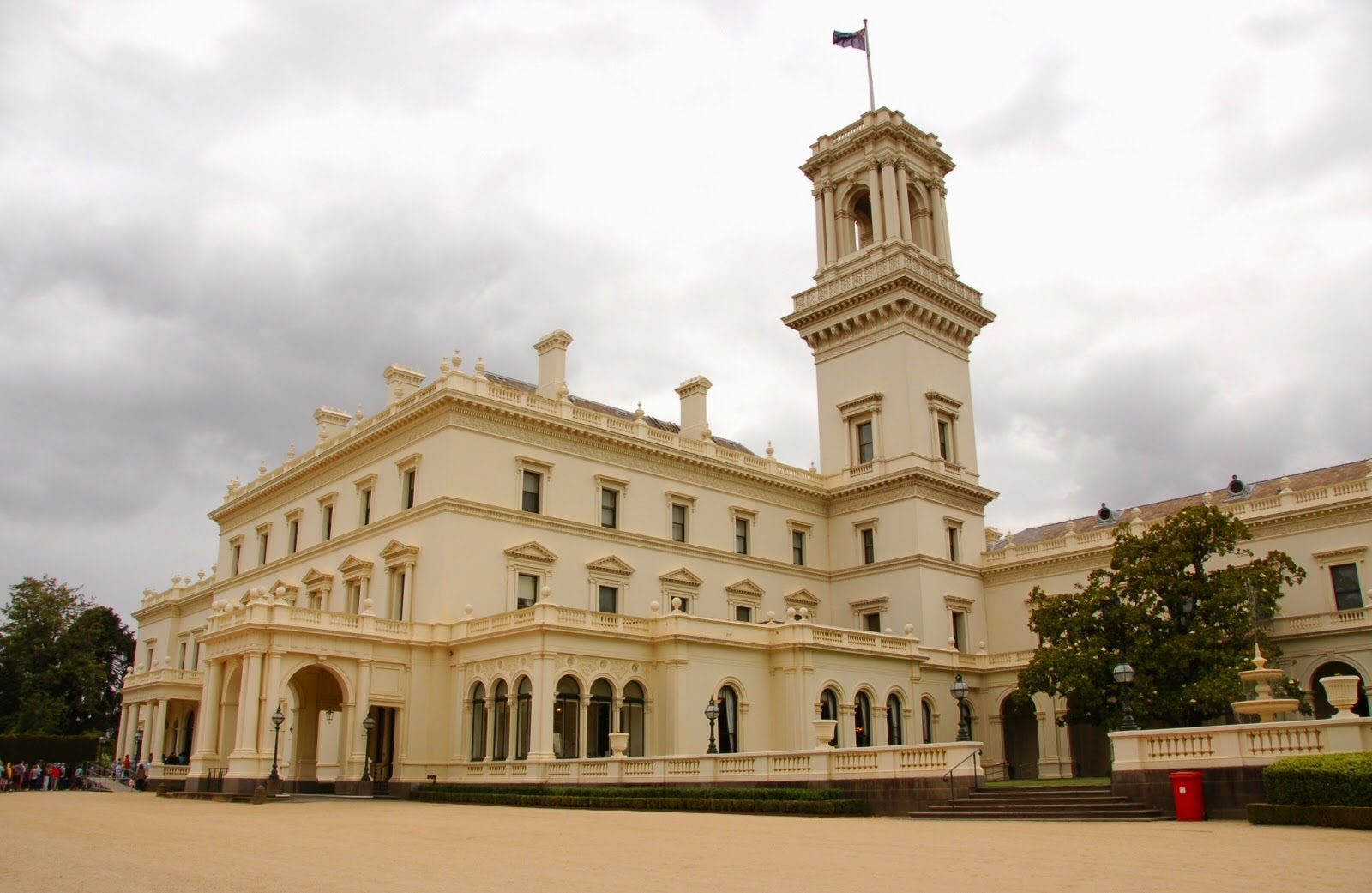
Clue 1 - Reminiscent of Queen Victoria's summer residence on the Isle of Wight.


Clue 2 - This building is surrounded by parkland.


Clue 3 - Typical of the grandeur of wealthy 'gold rush' Melbourne architecture
and stands as a symbol of our colonial past.


Clue 4 - Famous people to have sat at the banquet table in the dining room include Her Majesty The Queen, His Royal Highness The Prince Philip, Duke of Edinburgh, His Royal Highness The Prince of Wales, Diana, Princess of Wales, Hillary Rodham Clinton and countless Heads of State.


Clue 5 - In 1841, a site of eighty-three acres was set aside for this building and grounds. The location was selected by Victoria’s first colonial Lieutenant-Governor, Charles La Trobe.

- REVEAL -


The picture is of the Government House, Government House Drive, Melbourne.


This page was last updated 5th December 2014.


* Please Note:
The prize is limited to Australian residents and will be delivered by Australia Post or directly if you are an Osca customer.  
You may, if you choose, nominate to donate the prize to your favourite charity and we will do so on your behalf.

Where in Melbourne Puzzle - October 2014

Welcome, this is the Osca Monthly Where in Melbourne Puzzle page.
(There is a new puzzle posted on the first Monday of every Month.)

THIS PUZZLE HAS BEEN REVEALED

DEGREE OF DIFFICULTY


Here is the first clue:

"Once again, we have found a location close to the City of Melbourne,
just a short walk from Flinders Street Station." 


Clue 1 - Contemporary offerings


Clue 2 - Kunsthalle

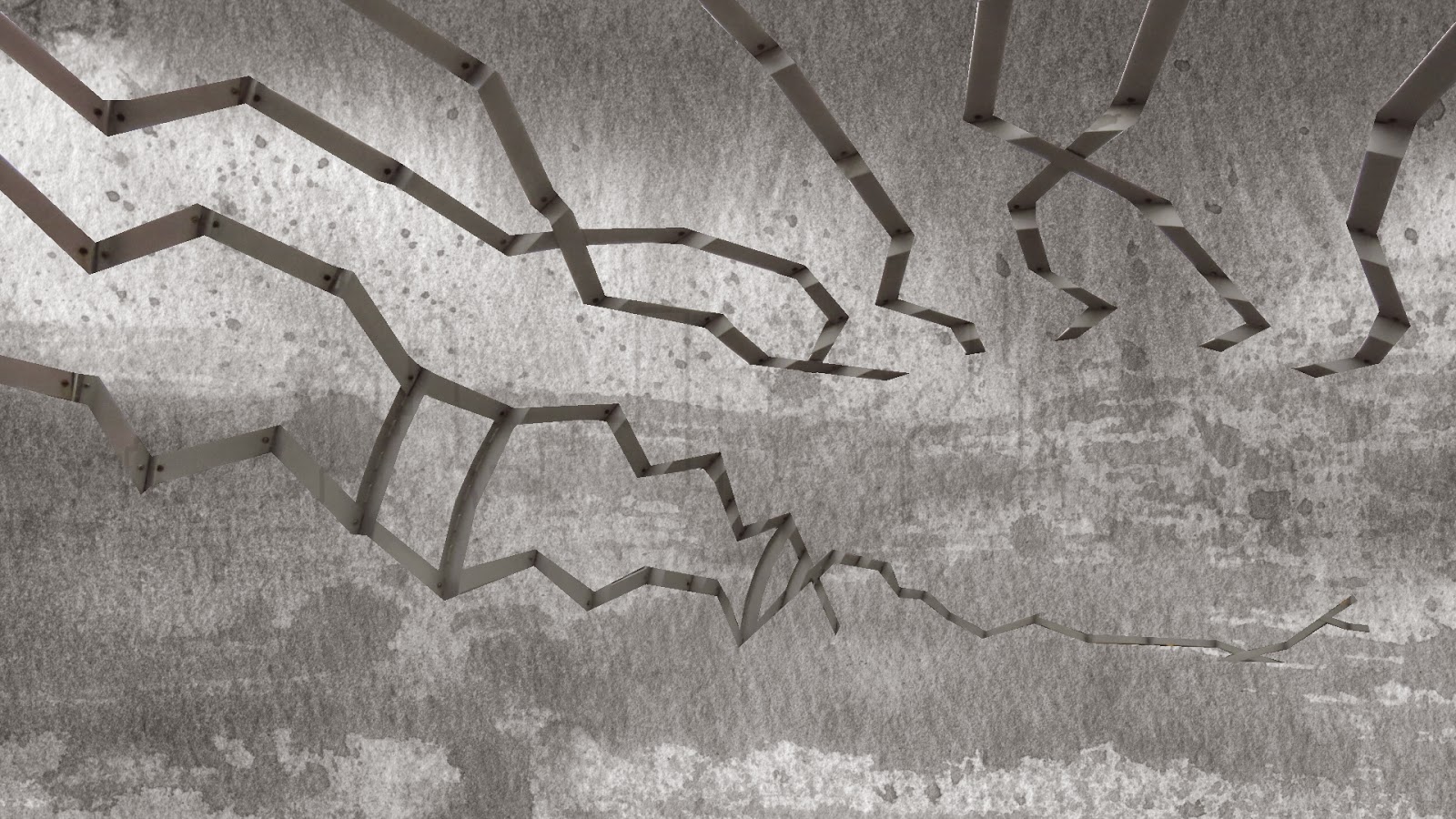
Clue 3 - That narrows things down a bit. Whatever the object is, it is covered in rust. 
 
"One more clue before the puzzle is revealed this coming Friday (31st Oct).

So far we've established that the hidden object is of a contemporary nature and a 'Kunstahle'.
In fact, according to their webpage, this is the only kunstahlle in Australia.
A Kunsthalle is a term in German-speaking regions for a facility
that mounts art exhibitions.  The term roughly means "Art Gallery" in English
but with a somewhat more specific meaning. "
 

 Clue 4 - "More rust - it is like the entire building might be covered in it"

- REVEALED -


The correct answer to this month's puzzle is :

The Australian Centre for Contemporary Art, 111 Sturt Street, Southbank.

...

The Australian Centre for Contemporary Art (ACCA) is Melbourne’s leading contemporary art space, and the only major public gallery in Australia focused on commissioning rather than collecting.

ACCA’s building, completed in 2002, and designed by local architects Wood Marsh, has become one of Melbourne’s best loved architectural icons. The distinctive rusty steel façade contrasts with the shiny, inter-pressed metal and glass surface of the foyer’s interior, creating a space designed to provide an exciting contemporary art experience.

Australia’s only ‘kunsthalle’, ACCA brings the latest and most significant artwork by living artists from around the world to Melbourne audiences, and commissions new artworks by local and international artists.

ACCA :
111 Sturt Street Southbank Victoria 3006 Australia

Opening Hours :  
10am - 5pm, including weekends & public holidays
Wednesdays open till 8pm
Monday by appointment

info@accaonline.org.au


research links :


This post was last updated on the 3rd of November 2014.


* Please Note:
The prize is limited to Australian residents and will be delivered by Australia Post or directly if you are an Osca customer.  
You may, if you choose, nominate to donate the prize to your favourite charity and we will do so on your behalf.

Monday, September 1, 2014

Where in Melbourne Puzzle - September 2014

Welcome, this is the Osca Monthly Where in Melbourne Puzzle page.
(There is a new puzzle posted on the first Monday of every Month.)

THIS PUZZLE HAS BEEN REVEALED


DEGREE OF DIFFICULTY


Here is the first clue:


Clue 1 - It's a tangled webb with a purpose.


Clue 2 - Connect the dots to see what connects the sides.


Clue 3 - Positioned between two banks.

"Three Clues down. Clue 1 said it was a webb - big clue.
And as you can see it is turning out to be quite a twisted web of metal. 
Connecting two sides and positioned between two banks almost gives it away. 
So here comes one more clue before the end of September. Any ideas yet?" 


Clue 4 - Another way of getting to Docklands on foot.


SOLUTION :


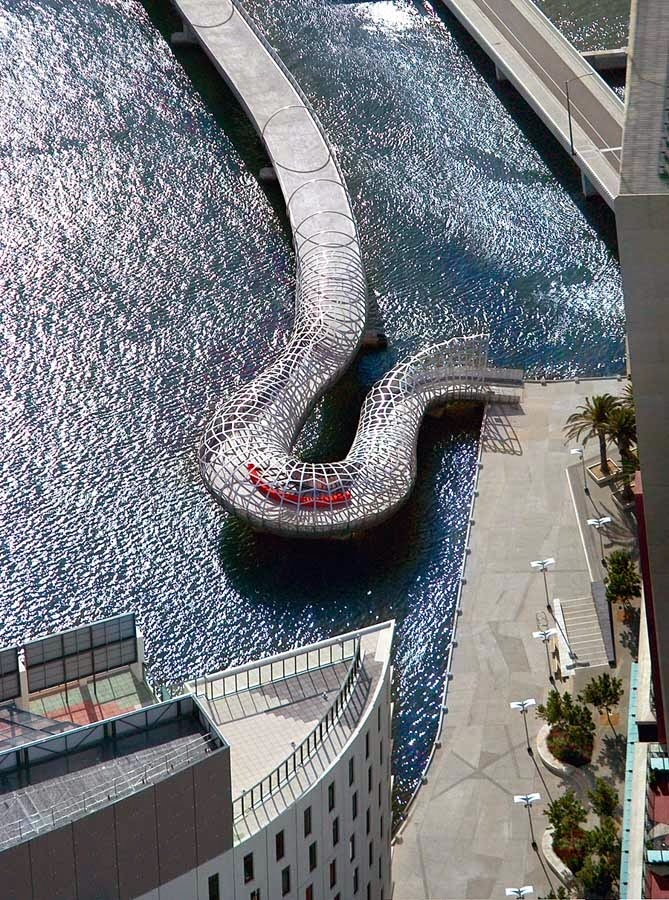
Solution : The Webb Bridge over the Yarra at Docklands.

Webb Bridge is an award winning bridge designed by Denton Corker Marshall,
in collaboration with artist Robert Owen, forming a cycling and pedestrian link
to the main part of Docklands, through Docklands Park.


The bridge comprises two distinct sections: the 145m long existing structure
(used to be the Webb Rail Bridge) and a new curved 80m long ramped link.


It's an interesting, unique-looking bridge which is part of a Melbourne public art project, the artist, Rober Owen imagined and was reportedly inspired by the Koori eel trap.

The ramp takes up level changes and creates a point of arrival at the south bank. They are joined seamlessly, with an emphasis on volume and containment within the curved and sinuous form.

Owen's idea for an eel-trap shape lattice that envelopes the bridge was passed to the engineers Arup (who were responsible many years ago for the Sydney Opera House).


Arup developed the spine and elliptical shaped structure so that it represents the artist's intentions,
but was also buildable and affordable.
(Built downstream and shipped already erected to the site, it was placed in just a few hours).


research and image links

Australian Institute of Architects

Pinterest


Denton Corker Marshall Architects

 The Age

Goaustralia


This page was last updated Monday September 22nd 2014.

Monday, August 4, 2014

Where in Melbourne Puzzle - August 2014

Welcome, this is the Osca Monthly Where in Melbourne Puzzle page.
(There is a new puzzle posted on the first Monday of every Month.)

THIS PUZZLE HAS BEEN REVEALED


DEGREE OF DIFFICULTY


Here is the first clue:


Clue 1 - It's about the state of mind.

 11-08-14
"One week down and the puzzle remains unsolved. Seems worthy of the four star difficulty rating.
Rest assured the clues will all make sense when you know what the picture is.

Here is a free clue:


'To solve the puzzle, read all about it' 
But then, some of you know that already ;)

Remember, if you solve the puzzle with the next (2nd) picture clue
the prize is waiting to be given away." 


Clue 2 - Neatly stacked.
  

Clue 3 - This building has many stories.


Clue 4 (Last Clue) -  Founded in 1854 and conceived as 'the people’s university' - a place where the world’s knowledge and information would be freely available to all citizens of the growing colony of Victoria, regardless of their social status or financial resources.
  . . .

The Answer to this month's puzzle.


The photo is of the La Trobe reading room at the State Library of Victoria, 328 Swanston St, Melbourne.

Let's go over the clues :

First clue - It's about the state of mind.
The clue being 'state of mind' - 'state' as in State library,
'state of mind' as in books improve our state of mind.

Second clue - Neatly stacked.
Books in a library are usually neatly stacked in rows and categories.

Third clue - This building has many stories.
Now that we all know it was the State Library, this clue is a giveaway.

Clue four - Founded in 1854 and conceived as 'the people’s university' - a place where the world’s knowledge and information would be freely available to all citizens of the growing colony of Victoria, regardless of their social status or financial resources.
Say no more.
. . .

And now a little bit about

The State Library of Victoria.

In 1853, the decision to build a state library was made at the instigation of Lieutenant-Governor Charles La Trobe and Mr Justice Redmond Barry, Q.C. A competition was held to decide who would design the new building; local architect Joseph Reed, who later designed the Melbourne Town Hall, Ormond College and the Royal Exhibition Building, won the commission.

Lithograph depicting the original vision for the State Library complex,
including the original Victorian reading room dome as part of the never-realised Russell Street annexe.

On 3 July 1854, the recently inaugurated Governor Sir Charles Hotham laid the foundation stone of both the new library and the University of Melbourne. The library opened in 1856, with a collection of 3,800 books chosen by Mr Justice Barry, the President of Trustees. Augustus H. Tulk, the first librarian, was appointed three months after the opening.

Library staff circa 1893.

The first reading room was the Queen's Reading Room (now Queen's Hall), which opened in 1859. 

Temporary buildings built in 1866 for the Intercolonial Exhibition remained in use by the library until 1909 when work began on a new annexe building to mark the library's Jubilee. 


This new building was the landmark Domed Reading Room, which opened in 1913 and was designed by Norman G. Peebles.

Plans for the original annexe were scaled back due to the money running out and the annexe, to house a new museum were gradually built during the Interwar years in an austere stripped classical style.

The library complex also held the State's Gallery and Museum until the National Gallery of Victoria moved to St Kilda Road in the late 1960s, and the current Melbourne Museum was built in the Carlton Gardens in the 1990s.

The library underwent major refurbishments between 1990 and 2004, designed by architects Ancher Mortlock & Woolley. The project cost approximately A$200 million. The reading room closed in 1999 to allow for renovation, during which natural light was returned. The renamed La Trobe Reading Room reopened in 2003.

La Trobe Reading Room.

At the La Trobe Reading Room, you'll see the best-known and most impressive architectural feature of the Library – the great reading room and its dome. Built in 1913, this octagonal building is six stories high and can house 32,000 books and 320 readers at its desks.

Known as the Domed Reading Room until it was reopened in 2003 the building is an architectural feat. When it was built in 1913, the enormous reinforced-concrete structure was the largest in the world.

. . .

There is a great video on the State Library website worth a look.
It depicts the architectural evolution of the State Library from 1853 to now.

. . .


The State Library of Victoria is located at :

328 Swanston St,
Melbourne, Victoria

Nearest train station - Melbourne Central

Nearest tram stop - Cnr Swanston & La Trobe streets 

Opening Hours 
The Library is open seven days a week, excluding some public holidays.

    Monday to Thursday: 10am–9pm
    Friday to Sunday: 10am–6pm
 . . .

Research links :


This page was last updated Monday September 1st, 2014

Monday, June 30, 2014

Where in Melbourne Puzzle July 2014


Welcome, this is the Osca Monthly Where in Melbourne Puzzle page.
(There is a new puzzle posted at the beginning of every Month.)


WHERE IN MELBOURNE - JULY PUZZLE

This month's puzzle has not been solved and is revealed today, 28th July 2014. 
 Scroll down to read all about July's mystery location.


 Clue 1 - 'Not all volcanoes are the same'

"Ok, I thought the palm tree would have helped suggesting that the location might be a park of some kind. I've also included the seat in the first clue. It appears to have been around for a while. But of course the big clue is the reference to a volcano. As with the other puzzles, this location is close to the heart of the city where volcanoes don't exactly abound."

"Never mind, it is time for another clue.

  Clue 2 - 'Oh look, another palm tree. But this one is a different species'

PLEASE NOTE    

 "Unfortunately, at this point of updating the blog on the 28th to reveal the answer, one of those inexplicable computer things happened and the blog reverted to a draft from about 2 weeks ago.

I have lost all the post from clue 2 onwards and the work I did on the history.

Apologies.

I will attempt to re-build the article."


Clue 3 made a reference to the lovely green lawn, more species of plants and a garden setting.
 
 Clue 4 went something like this -

In 1873, then curator of these gardens, William Guilfoyle had a bluestone reservoir built to solve watering problems. Inspired by tropical landscapes he'd seen in his travels, Guilfoyle designed and landscaped the reservoir to be reminiscent of a volcano.

When the gardens connected to mains water in the 1930's, the reservoir fell into disrepair, but it's been resurrected over the last few years by landscape architect Andrew Laidlaw.

 And now for the Solution

 This month's photo is of Guilfoyle's Volcano at the Botanic Gardens.

. . .


A little bit of history about Guilfoyle's Volcano.

William Robert Guilfoyle (1840-1912) was a landscape gardener and botanist, acknowledged as the architect of the Royal Botanic Gardens and responsible for the design of many parks and gardens in Melbourne and regional Victoria.

 W R Guilfoyle

Born in Chelsea, England, to Charlotte (née Delafosse) and Michael Guilfoyle, a landscape gardener and nurseryman, the family migrated to Sydney in 1853. William Guilfoyle was educated at Lyndhurst College, Glebe where he received botanical instruction by William Woolls, William Sharp MacLeay and John MacGillivray, who all encouraged him to follow in his father's career.

 In 1868 William Guilfoyle was appointed to the scientific staff of HMS Challenger that travelled around the Pacific Ocean.

 HMS Challenger
 
He recorded the voyage with a series of watercolour sketches and a detailed account in the Sydney Mail. Guilfoyle settled in the Tweed River valley where he grew tobacco and sugar cane and first met the noted German botanist, Ferdinand von Mueller.

Australian Botany (1878)

In April 1873 Mueller created the genus Guilfoylia and described William Guilfoyle as "distinguished as a collector who evidenced great ardour" and held high hopes for his collecting ability. Mueller's opinion changed when Guilfoyle was appointed to take his place as Director of the Royal Botanic Gardens, Melbourne on 21 July 1873.

Mueller accused Guilfoyle of being a "nurseryman with no claims to scientific knowledge whatever" and of getting the job due to being related to the wife of the responsible Minister and went on to subsequently abolish Guilfoylia as part of the genus of Cadellia in his botanical census of 1882.

His scientific and educational approach to the Botanic Gardens come in for criticism by influential Melburnians, who wanted a more aesthetic gardens for recreational use.

 Plan of the Melbourne Botanic Garden by William R Guilfoyle - Director.


William Guilfoyle set about creating the Gardens’ world-famous "picturesque" landscape style.

Over the next 35 years, Guilfoyle sculpted sweeping lawns, meandering paths and glittering lakes, creating a series of vistas offering a surprise around every corner. The swamp and lagoon were separated from the Yarra River under the direction of Carlo Catani, a civil engineer with the Public Works Department, allowing Guilfoyle to create the chain of ornamental lakes further adding to the beauty of the gardens.

A feature of Guilfoyle’s designs were the erection of over a dozen structures in the Gardens, including pavlions, summer houses, rotundas and ‘temples’. These structures were generally located at junctions along the path system and took advantage of an attractive view. They were also practical buildings providing much needed shelter from Melbourne’s hot summer sun and unpredictable rain. The Rose Pavilion, for instance, was used for band recitals during the summer months. 

The Rose pavillion.

Another, the "Temple of the Winds" monument was dedicated to Governor Charles La Trobe. The temple is composed of 10 columns instead of the normal 8 or 12 which are more easily divisible by the four points of the compass. According to historian Ken Duxbury, such structures added a picturesque charm to the landscape, highlighting points of visual interest along the trail of the paths and serving a role not dissimilar to the grottos, classical temples, follies, hermitages and pagodas along the circuit walks of the classic ‘English Landscape School’ gardens such as Stourhead.

The Temple of Winds monument to La Trobe.

In addition to these structures, Guilfoyle added a series of large iron archways to highlight entry to the rest houses and to mark points of transition like ‘doorways’. About ten of these archways still remain


Guilfoyle originally constructed his 'volcano' in 1876 with the aim of providing gravity-fed irrigation for the Botanic Gardens. It remained the main water supply until the 1930's, when the gardens were connected to the mains water and the reservoir fell into disrepair.

For many years there had been plans to reopen the volcano to the public and finally in 2008 the project received the much needed funding and work commenced. 

Guilfolye, was quoted as saying, “Combine the useful with the ornamental.” The restoration by lanscape architect Andrew Laidlaw has made it into a reservoir again. Combining the ornamental with the useful.

With an overall planting theme of “Gardening for an Increasingly Dry Climate”, the design is aimed at showcasing plants that perform well under such conditions.
 
 Entrance to Guilfoyle's volcano.


With no original plans to go on, Andrew Laidlaw set out to evoke a volcanic eruption by using succulents, which when not watered turn red creating 'lava flows' right around the volcano and bold features including rocks that appear as if they have been blasted out of the volcano and strewn over the landscape.


Getting there:

Tram 8 will take you almost to the Volcano. Get off at the Corner of Domain Road and Park Street and walk into the gardens.  It is right there. The Botanical Gardens can also be accessed from St Kilda Road – follow the signs to Guifoyle’s Volcano.

Parking:

1 hour free in Domain Road. Paid parking in Birdwood Avenue.

Opening Hours:-

The gardens are open from 7.30am to sunset every day of the year.


research links :
Rbg 
 
This page was last updated Monday July 28th 15:35PM AEST.